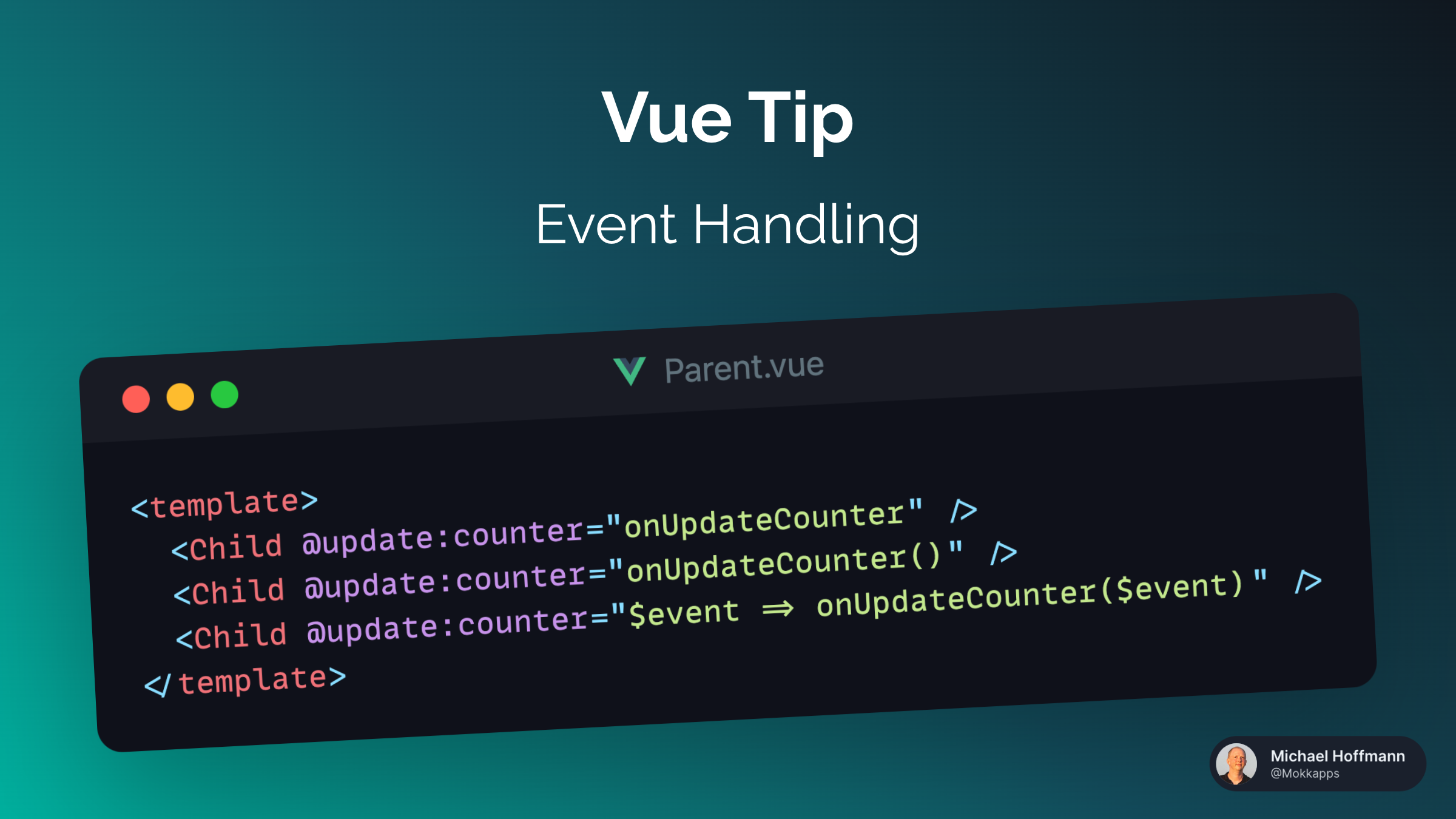
There are different ways how to handle events in Vue. Let's take a look at them.
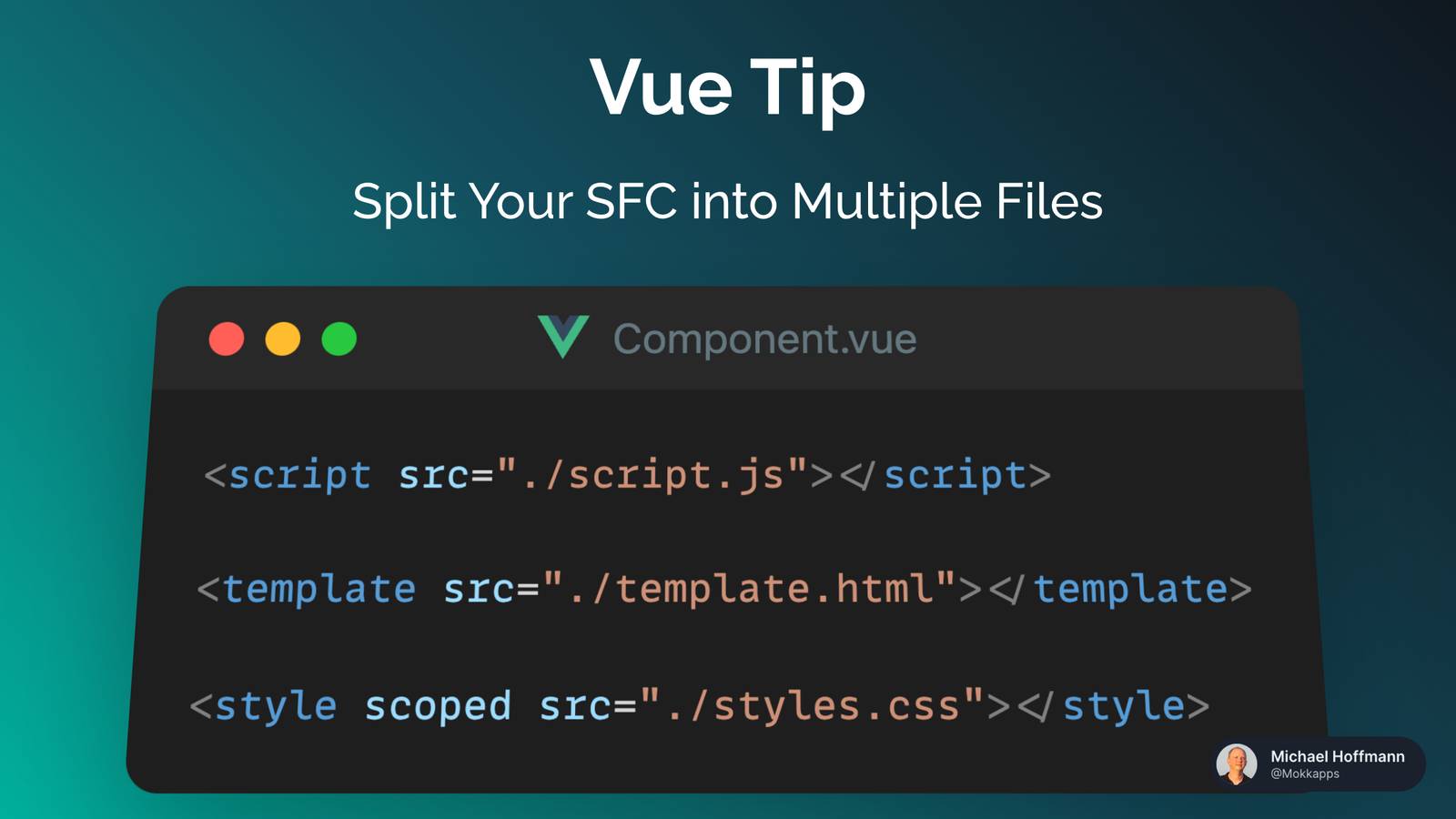
Vue Tip: Split Your SFC into Multiple Files
Use the 'src' attribute to import an external file for a language block in your Vue Single-File Components (SFC).
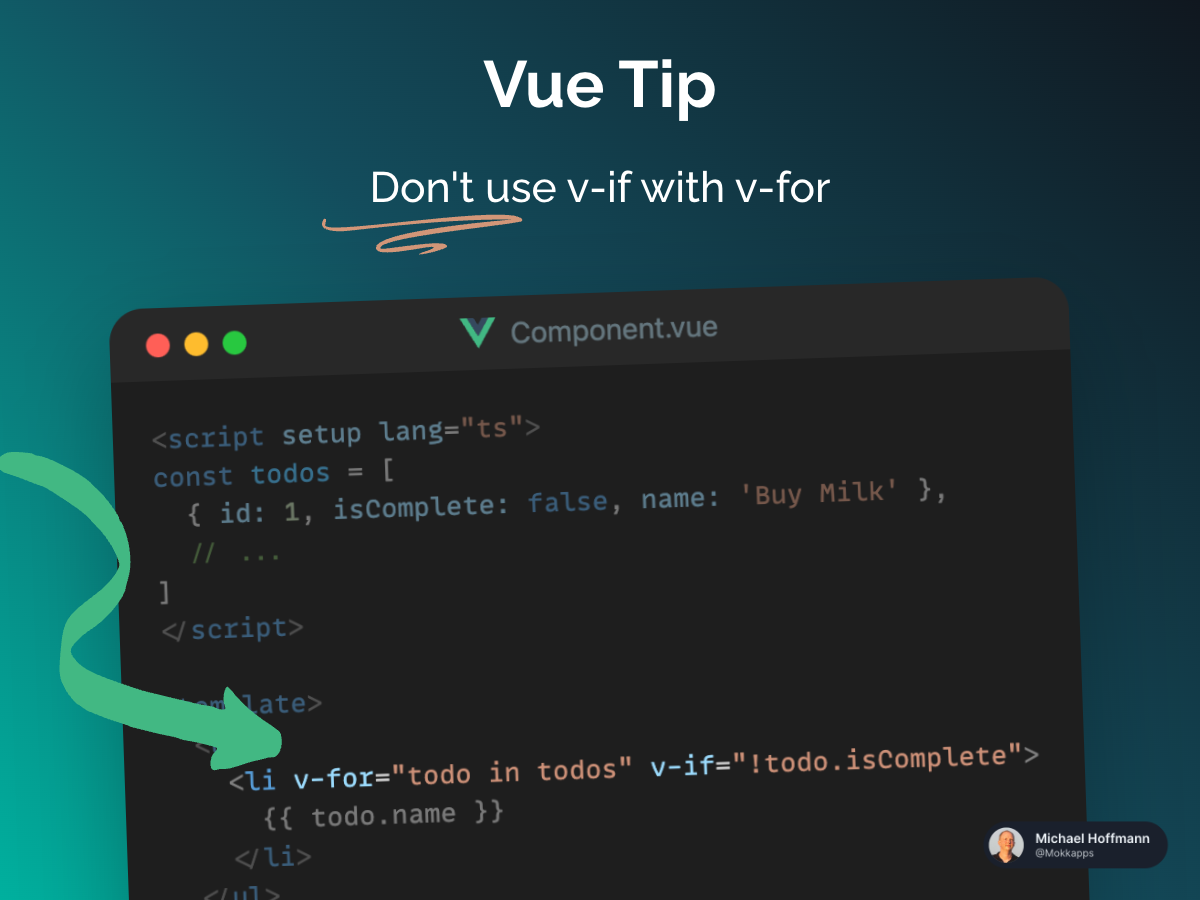
Vue Tip: Don't Use v-if With v-for
It can be tempting to combine v-if with v-for but you should avoid it as it will throw an error.
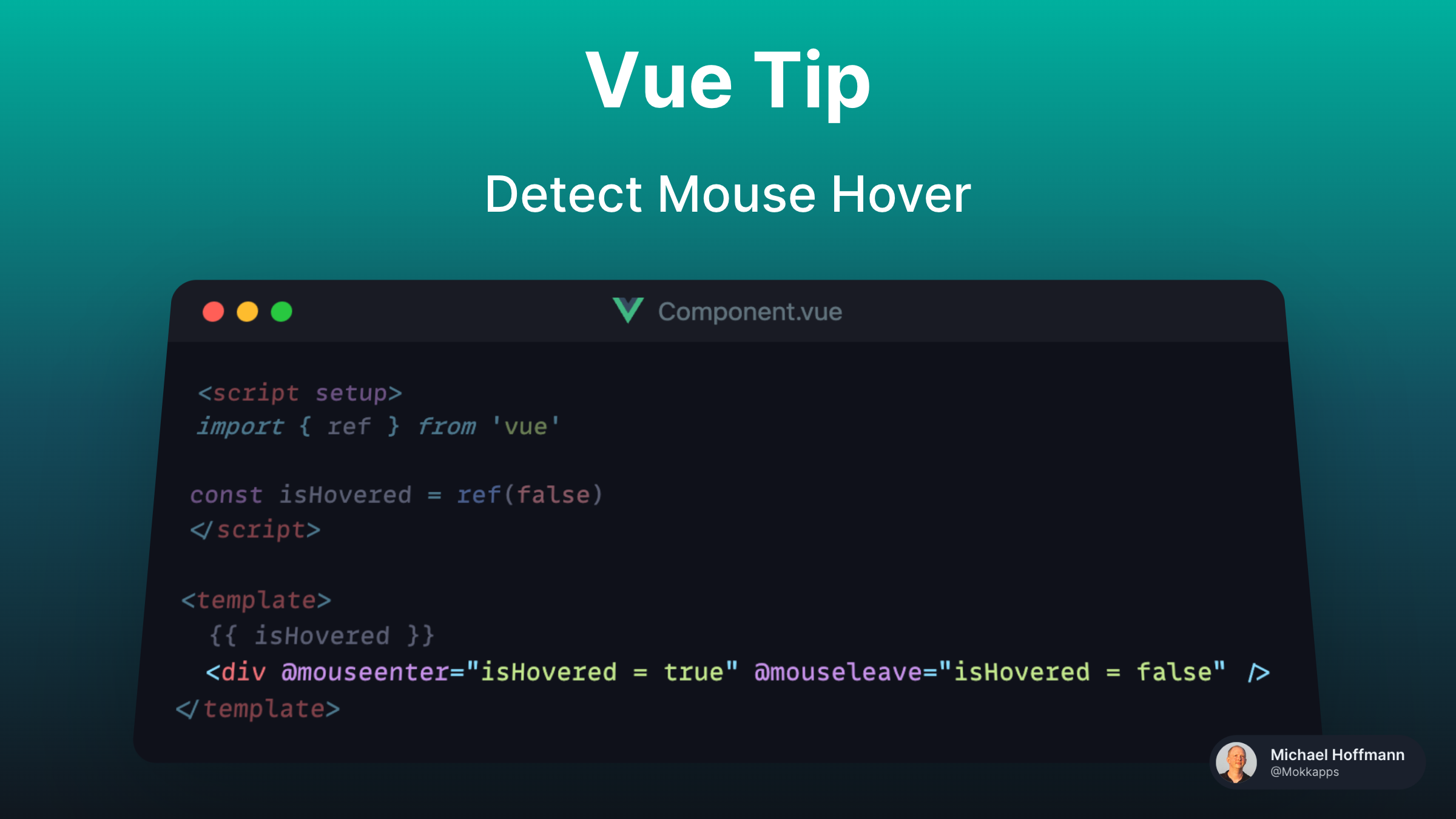
Vue Tip: Detect Mouse Hover
You can use Vue event handlers to detect mouse hover events.
Vue Tip: Chaining Event Modifiers
By chaining multiple event modifiers together, you can create sophisticated event handling scenarios with ease.
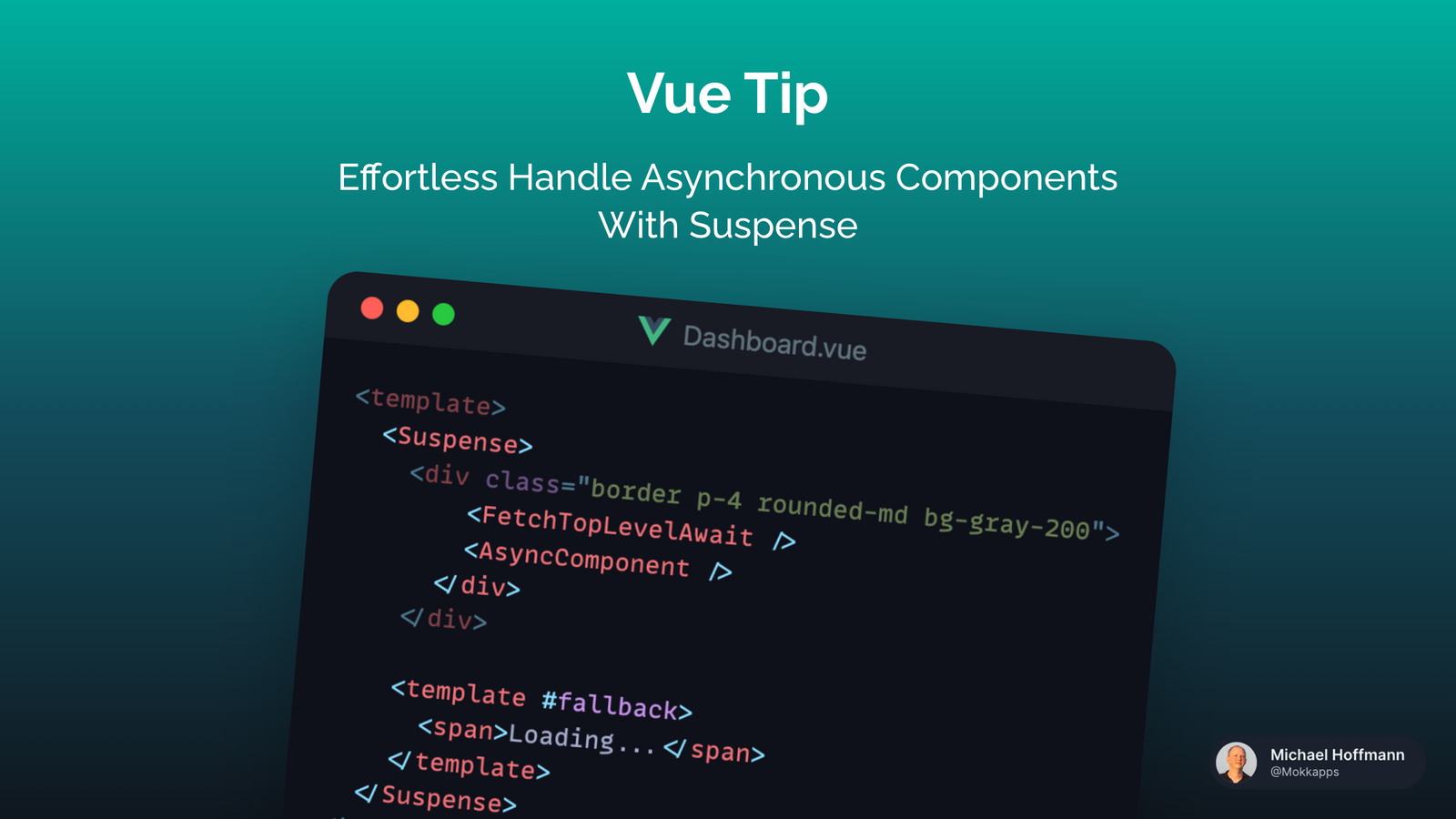
Vue Tip: Effortless Handle Asynchronous Components With Suspense
Suspense components are used to display fallback content when waiting for some sort of asynchronous component to resolve.
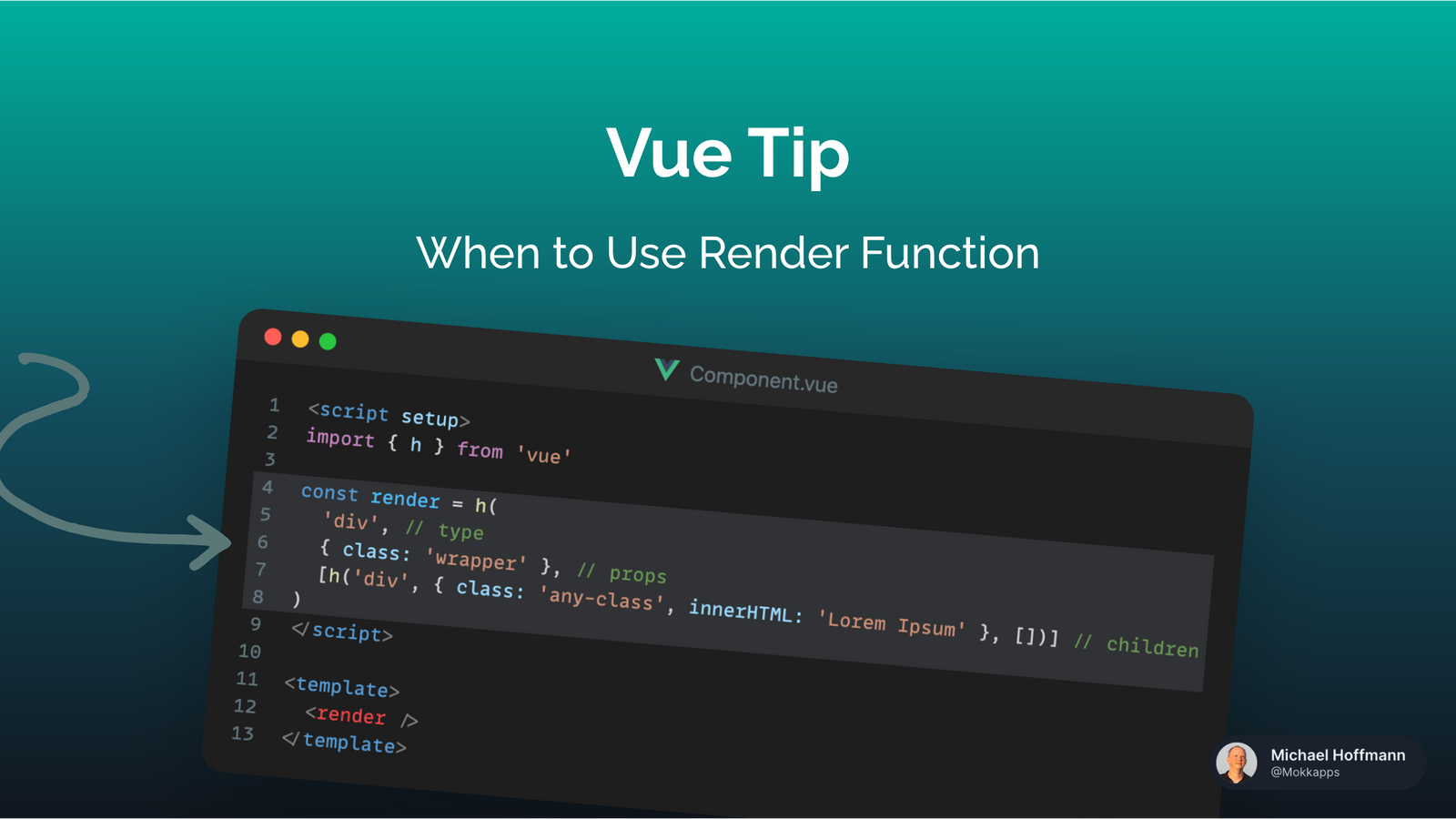
Vue Tip: When to Use Render Function
When should I use a render function in Vue.js? We’re going to cover some advanced Vue.js patterns when you need to use render functions.
Vue Tip: Debugging in Templates
Guide to debug Vue component templates using the Browser DevTools.
Vue Tip: Avoid Mutating a Prop Directly
Mutating props is an anti-pattern. You should use computed properties instead.
Vue Tip: Disable Attribute Inheritance
By default, parent scope attribute bindings that are not recognized as props will "fallthrough". This may not always be the desired behavior and, therefore, can be disabled. A typical use case is a component with multiple root nodes.